1. Introduction
A medical portal in pharma is a secure, science-first digital platform designed to provide healthcare professionals (HCPs) with accurate, evidence-based medical information, while protecting sensitive patient data. Unlike commercial or promotional platforms, these portals are intentionally built to be unbiased, compliant, and reliable.
The purpose is to strengthen trust between pharmaceutical companies and healthcare providers. By facilitating access to clinical data, peer-reviewed research, and answers to medical inquiries, medical portals serve as a reliable knowledge hub and one of the most trusted communication channels between pharmaceutical companies and HCPs. Access controls are essential for restricting unauthorized users and ensuring compliance with regulations like HIPAA and GDPR.Instead of scattering critical medical information across multiple channels, a well-structured medical portal consolidates resources into a single, secure, and transparent environment.
For a pharmaceutical company, this responsibility includes safeguarding sensitive patient data. For healthcare organizations, this means also ensuring that HCPs receive the right information at the right time, in a way that supports both scientific integrity and engagement.
2. How do medical portals differ from HCP portals and patient portals?
While medical portals, HCP portals, and patient portals share some similarities, their purpose, ownership, and content types are fundamentally different. Recognizing these differences is essential for designing appropriate digital solutions for each stakeholder group. It is vital to analyze the specific needs of each user group to customize portal features, content, and support effectively.
1. Medical portals
Medical portals are owned and managed by medical affairs teams, with content limited to scientific and clinical information. They are designed exclusively for HCPs and serve as unbiased sources of truth. This includes trial data, peer-reviewed publications, safety updates, and responses to medical inquiries.
Because they are free of promotional material, medical portals are trusted environments where HCPs know they will find evidence-based knowledge. Medical portals often provide access to up-to-date clinical guidelines to support HCP decision-making.
For instance, an oncology portal might provide access to clinical trials and studies, as well as updated safety information, giving oncologists immediate access to the insights they need for informed treatment decisions.
2. HCP portals
HCP portals are usually owned by commercial or marketing teams. They provide HCPs with a mix of promotional and educational resources, including e-detailing materials, product training, brand updates, and invitations to webinars.
Unlike medical portals, which prioritize scientific integrity, HCP portals are driven by engagement. HCP portal development involves understanding HCP needs and designing features that enhance engagement. Their strategic value lies in boosting product visibility and offering convenience to HCPs.
For instance, a cardiology HCP portal may include interactive product demos and direct access to sales reps alongside limited medical content.
3. Patient portals
Patient portals, in contrast, are built for patients and caregivers and are often owned by patient support, market access, or commercial teams. A custom patient portal can be tailored to the specific needs of labs and pharmacies, offering unique features and workflows that generic solutions cannot provide. Their content focuses on education and support: adherence tools, symptom trackers, appointment scheduling, and lifestyle advice.
The primary purpose here is to empower patients to better manage their treatment journeys, improve medication adherence, and actively improve patient engagement in day-to-day healthcare decisions.
Custom patient portals can integrate seamlessly with EHR systems and facilitate secure data exchange, ensuring regulatory compliance and enhancing the overall patient experience.
For example, a diabetes patient portal may let users log blood glucose levels, access tailored diet recommendations, and connect with patient support nurses — all designed to improve adherence and outcomes. Features like medication reminders and timely notifications about test results help engage patients and support better health outcomes.
Why does this distinction matter?
Although the three portal types share a digital foundation, their roles in pharma strategy could not be more different:
- Medical portals are strictly science-driven, building trust with HCPs.
- HCP portals are engagement tools designed to strengthen brand presence and marketing strategies.
- Patient portals are designed to support individuals directly in their treatment journeys.
Blurring these lines can lead to compliance risks and credibility issues. Clear distinctions ensure that each audience receives the right information, in the right format, from the right source.
Comparison of medical portals, HCP portals, and patient portals in pharma
| Portal type | Owned by | Primary audience | Content | Purpose |
| Medical Portal | Medical affairs | HCPs | Scientific, evidence-based, non-promotional | Provide accurate, unbiased, compliant knowledge |
| HCP Portal | Commercial/Marketing | HCPs | Mix of promotional + educational | Support engagement, product education, marketing strategies |
| Patient Portal | Support engagement, product education, and marketing strategies | Patients & Caregivers | Educational content, adherence tools, patient program resources | Empower patients, support treatment management, enhance patient engagement |
3. Strategic value for healthcare organizations
Medical portal development is a strategic investment in how scientific information is shared, trusted, and acted upon. Because these portals are managed by medical affairs and are focused exclusively on non-promotional content, they directly support pharma’s broader objectives of credibility and meaningful engagement.
1. Building long-term trust with healthcare providers
HCPs are increasingly selective about where they access medical information, and portals that provide a single, unbiased source of truth stand out. Health professionals rely on these portals for quick access to reliable information, clinical guidelines, and educational content, helping them save time and access personalized resources efficiently.
By ensuring content is peer-reviewed, evidence-based, and verified by experts, healthcare organizations can position themselves as partners in advancing science, not just suppliers of products.
Over time, this consistency translates into deeper HCP relationships and stronger collaboration in areas like clinical research, education, and patient support.
2. Turning compliance into a strategic advantage
While compliance is often seen as a regulatory hurdle, medical portals demonstrate how it can become a competitive differentiator. By embedding guardrails such as role-based authentication, approval workflows, and audit trails, companies reduce risk while building confidence with both regulators and HCPs. Ensuring HIPAA compliance in all aspects of portal development is essential to protect patient data and meet regulatory requirements.
Beyond risk management, compliance-first design improves efficiency. Streamlined approval workflows accelerate content delivery and keep regional teams aligned. At the same time, visible transparency, like version control and validated sources, reassures HCPs that the information is reliable. In this way, compliance shifts from being a barrier to becoming an enabler of trust, speed, and market differentiation.
3. Generating actionable data-driven insights
Every interaction with a medical portal leaves a digital footprint. By tracking how HCPs access data — from which documents they prefer, what topics generate most inquiries, and where gaps exist — actionable insights can be extracted.
These patterns are more than just engagement metrics; they are strategic insights that allow medical affairs to refine communication strategies, anticipate HCP needs, and contribute to broader population health strategies by highlighting trends across regions and specialties.
In the future, combining medical portal insights with electronic health record data could provide a more comprehensive understanding of how scientific knowledge informs treatment decisions and patient outcomes.
4. What are some key features?
Innovation in medical portal development is more about building a platform that is compliant, user-centric, and adaptable to evolving healthcare needs. Let’s discuss a few essential features for making these healthcare portals a strategic asset and a trusted resource:
1. Role-based identification and secure access
Not all users need the same level of access. By implementing role-based authentication, you make sure that only verified HCPs can view sensitive data, while administrators can manage content securely. Automating administrative tasks through advanced health portals also enhances efficiency and reduces errors, enabling healthcare professionals to devote more time to patient care.
This dual structure protects compliance, reduces risk, and reassures HCPs that the information they are accessing is intended exclusively for them.
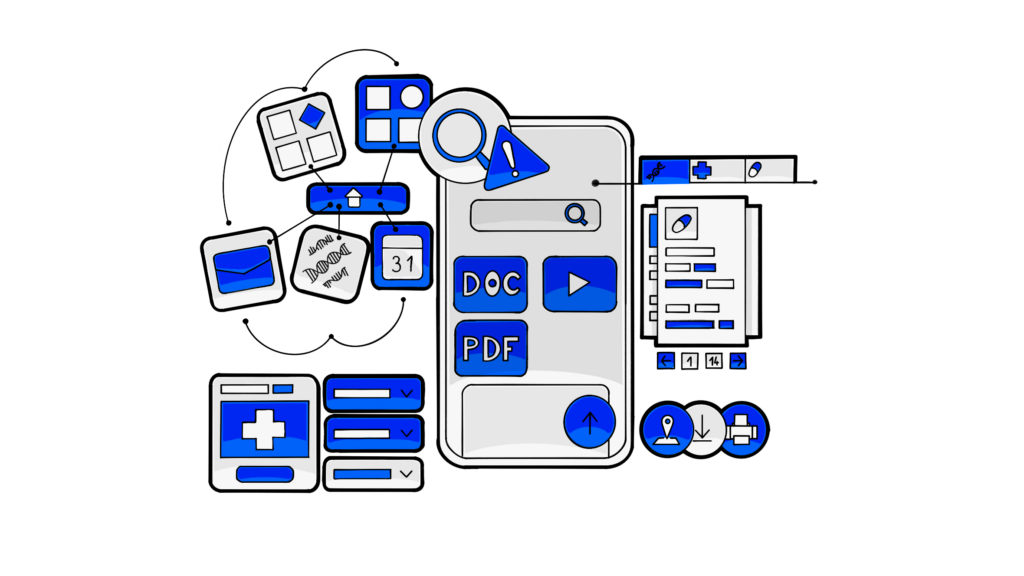
2. Comprehensive medical content repository
At the heart of every medical portal is its content. A robust, well-structured repository makes it easy for HCPs to access:
- Peer-reviewed publications and clinical research
- Product dossiers and trial summaries
- Safety communications and risk management plans
- Educational materials tailored to specialties
Streamlined content creation processes are crucial for maintaining a current and compliant repository, ensuring that new information is added efficiently and meets regulatory standards.
When organized with taxonomy, tagging, and version control, this repository evolves into a living knowledge hub rather than a static library.
For example, an oncology-focused healthcare portal can categorize content by cancer type and treatment stage. This way, HCPs can instantly access trial updates specific to their patients’ health, reducing search time.
3. Advanced search and personalization
HCPs expect the same intuitive search experience they have in customer platforms. Advanced indexing and AI-driven personalization enable HCPs to quickly find the content they need, while also surfacing related materials they may not have considered.
This transforms a portal into a dynamic, personalized experience rather than a one-size-fits-all tool.
For instance, when a portal user searches for guidelines on hypertension management, the AI-based recommendation system can also suggest related case studies and safety updates.
4. Interactive elements for two-way engagement
The best medical portals include advanced features that go beyond one-way communication — enabling dialogue through medical inquiry forms, evolving FAQs, and even compliant advisory boards. This way, they become collaborative spaces that strengthen the relationship between pharma and HCPs.
Collecting user feedback is essential to continuously improve portal features and usability, ensuring the platform meets the needs of healthcare professionals.
5. Integration with digital ecosystems
No web portal exists in isolation. Integrating with existing systems, CRM systems, scientific databases, electronic health records, and analytics platforms ensures the portal becomes part of a broader ecosystem.
Integrating a content management system (CMS) streamlines content updates and ensures regulatory compliance, which is essential for meeting healthcare industry standards. This enables unified HCP engagement, keeps literature up to date, and provides actionable analytics on portal use.
By connecting a medical portal to the company’s CRM, you can discover that HCPs who frequently download clinical updates are also more likely to engage with discussion forums. These insights can help you prioritize outreach to highly engaged specialists.
5. Best practices
Success comes from aligning key stakeholders, designing for HCP needs, and embedding compliance at every step. By following these best practices, medical affairs teams can ensure their portals deliver both strategic impact and day-to-day usability:
1. Align medical affairs, compliance, and IT early
A web portal encompasses multiple functions, including medical, legal, regulatory, and technical aspects. When these teams work in isolation, delays and rework are inevitable. Engaging compliance and IT early ensures that innovation and compliance progress together, preventing costly setbacks later.
2. Design with HCPs at the center
Even the most advanced portal will fail if HCPs don’t find it useful. Incorporating HCP feedback through interviews, surveys, user testing, and user-centered design principles makes sure that the interface reflects how professionals actually search, filter, and consume medical information.
3. Implement structured content management
Scientific information changes rapidly. Without a dedicated content management system to handle taxonomy, tagging, and version control, portals can quickly become cluttered and outdated. Keeping information reliable and easy to navigate — ensuring that portals stay living resources rather than static repositories.
For example, a portal supporting multiple therapeutic areas implemented standardized tagging by disease, drug class, and trial phase. This reduces duplicate uploads and improves content discoverability across regions.
4. Integrate with CRM and scientific databases
A medical portal is most valuable when it connects to broader ecosystems. Linking with CRM systems ensures a unified view of HCP interaction, while integration with scientific databases keeps content current and relevant. This makes the portal part of a company’s omnichannel strategy.
For example, integrating PubMed feeds into a healthcare portal can make sure that HCPs always have access to the latest peer-reviewed studies. Engagement with external literature can position the portal as a go-to resource.
5. Take a security-first approach
With sensitive data at stake, data security must be central; portals must implement robust security measures, from encryption to regular vulnerability testing.
Secure messaging, as a HIPAA-compliant communication method within medical portals, is also essential for protecting patient information and facilitating safe interactions. A proactive security strategy not only prevents breaches but also reassures HCPs that their access is safe.
6. Support adoption with training and onboarding
Even the best-designed healthcare portal can fail if HCPs aren’t guided on how to use it effectively. Onboarding campaigns, video tutorials, and live training sessions accelerate adoption and demonstrate the portal’s value.
5. Overcoming common challenges
Even with the right strategy, medical portal development in pharma comes with hurdles. From adoption struggles to complex compliance workflows, companies need to anticipate obstacles and design solutions proactively.
| Challenge | Solution | |
| Driving adoption among HCPs | Many portals fail not because of poor content, but because HCPs don’t adopt them. If the portal is difficult to navigate or doesn’t fit into the existing workflow, usability remains low. | Many portals fail not because of poor content, but because HCPs don’t adopt them. If the portal is difficult to navigate or doesn’t fit into the existing workflow, usability remains low. |
| Managing complex content governance | Medical, Legal, and Regulatory review processes can slow down content updates, leading to outdated information on the portal. | Automate governance workflows, integrate with data management systems, and create clear version control processes. Centralized dashboards allow medical affairs to see where the content is in the approval cycle, reducing bottlenecks. |
| Preventing information overload | Automate governance workflows, integrate with data management systems, and create clear version control processes. Centralized dashboards enable medical affairs to track the progress of content through the approval cycle, thereby reducing bottlenecks. | Use advanced search filters, tagging systems, and AI-driven personalization to surface the most relevant content. Tailor recommendations to specialties, geographies, and user behavior. |
| Balancing compliance with innovation | Medical affairs teams are often cautious about adopting new features due to concerns about regulatory risk. This can limit innovation and make portal feel outdated. | Medical affairs teams are often cautious about adopting new features due to concerns about regulatory risk. This can limit innovation and make the portal feel outdated. |
By anticipating these challenges and addressing them strategically, healthcare organizations can ensure that their medical portals are not just compliant repositories, but living platforms that HCPs rely on daily for scientific exchange.
6. Conclusion
Medical portal development in pharma has evolved beyond being a digital convenience. These portals are a strategic asset that enable medical affairs teams to build trust with HCPs, safeguard compliance, and deliver scientific content in ways that are accessible, personalized, and globally consistent.
When designed with the right features and best practices, a medical portal becomes more than a repository for information. It transforms into a living platform for scientific exchange, where HCPs can find evidence-based answers, engage, and stay aligned with the latest clinical insights.
For pharma companies, the opportunity lies in transforming compliance into a differentiator, turning data into insights, and leveraging digital innovation to create lasting partnerships with healthcare professionals.